The Life, Qualities, Legacy of Freddie Mercury
By:
Udhay Joshi
Posted
for: November 9, 2013
 |
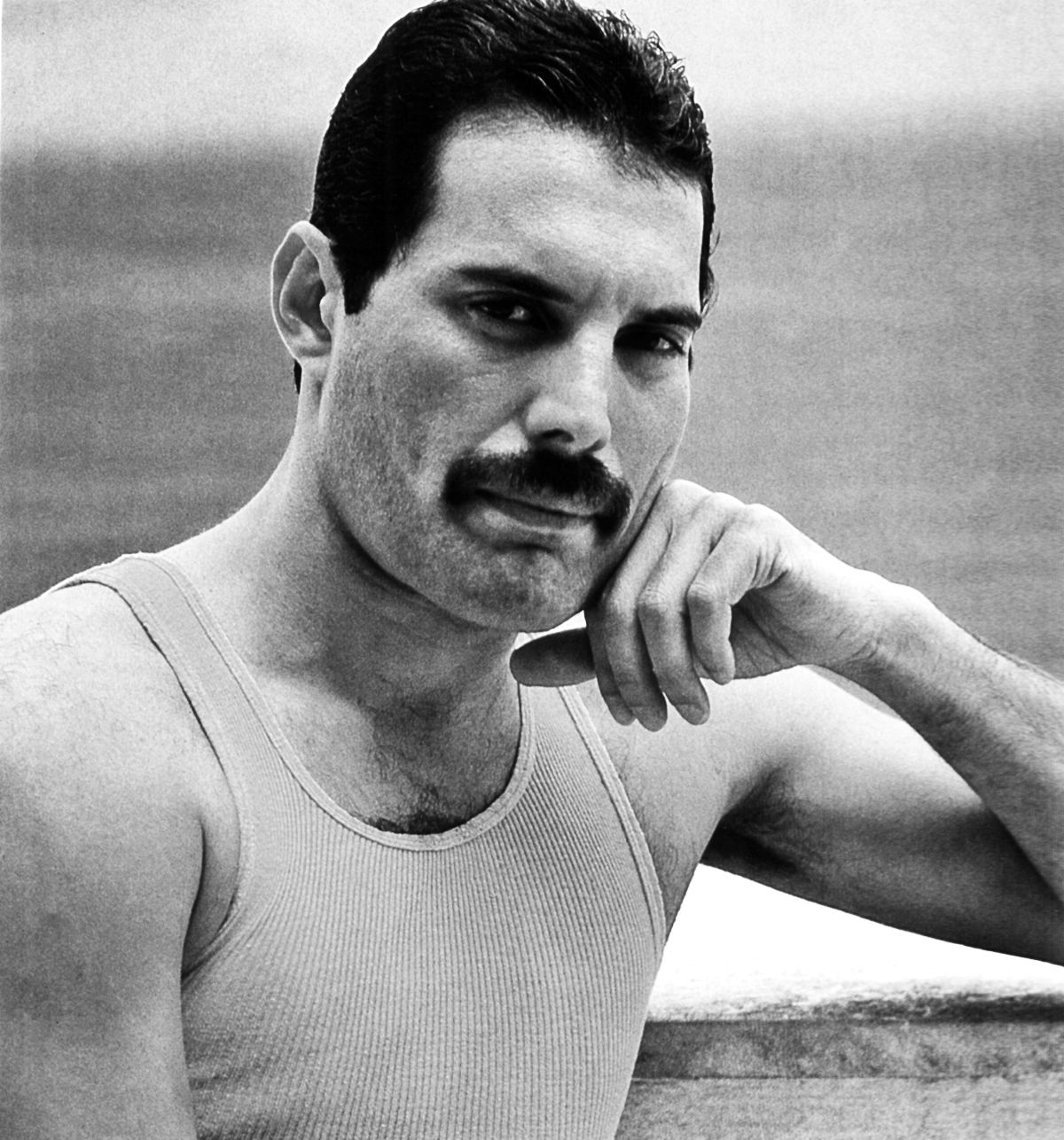
| Freddie Mercury (Courtesy of konbini.com) |
There
were many rock bands that became household names within the 1970s and 1980s,
but one band stood out from all the others. Queen was a collection of four very
talented musicians who banded together to create some of the best music of the
1970-1980s era. This music, like “We Will Rock You”, was very accessible to the
public and had the ability to connect people from all walks of life.
Queen’s
lead singer, Freddie Mercury, was exceptionally charismatic and tended to draw
his songwriting talent from sheer ingenuity, such as in the songs “Who Wants To
Live For Ever” and “We Are The Champions”, rather than through group consensus and
negotiation displayed by most bands of the era. Mercury’s distinctive persona
is defined through his creativity in songs, his fervent stage presence, and the legacy he left for future musicians.
Freddie’s Beginnings
Freddie
Mercury started his life born in Zanzibar as Farrokh Bulsara, and his passion
for music started early in his life. According to Jacky Gunn & Jim Jenkins
of freddie.ru, “He (Freddie) was music mad and
played records on the family's old record player, stacking the singles to play
constantly. The music he was able to get was mostly Indian, but some Western
music was available. He would sing along to either and preferred music to
school work.”
Freddie
came onto the worldwide rock scene in 1970 when he took some members of his
former band, Smile, and reformed them into the band known as Queen. Throughout
the 1970s and 1980s, the public was shocked, awed, entertained, and inspired by
the singing and dancing of this band who consistently defied all musical and
cultural norms.
Characteristics of the Legendary Singer
Drugs,
parties, charity work, operas, playing random music while watching the sunset,
and exploring homosexuality are an introduction to Freddie Mercury’s erratic
lifestyle outside of Queen. This lifestyle came to inspire popular culture
idolized by many youth in the 1980s. However, Mercury’s most admirable qualities
were not his erratic but hilarious lifestyle nor his philanthropist pursuits.
His most admirable qualities were his unique creativity in his songwriting and
his unequaled ability to entertain through song and dance.
 |
| One of Freddie's hilarious photos that reflect his humorous nature (Courtesy of http://queenphotos.files.wordpress.com) |
A
popular story highlighting Mercury’s unique musical gifts deal with the hit
1976 Queen song, “Bohemian Rhapsody”. The song was written, produced, and sung
by Freddie Mercury himself. The most inspiring aspect of “Bohemian Rhapsody” is
the exceptionally different theme of the song compared to songs released by
other musical groups of the time. The main theme of “Bohemian Rhapsody” is to accept death,
as it tells the story of a man committing suicide. In addition, the
instrumentals and vocals of this piece are very different from all other works
of the era, reflecting the sporadic thought process and musical creativity of
its writer.
Other
than the unique songwriting that constantly redefined the image of Queen,
Freddie Mercury was a prestigious and powerful vocalist. A good example of
Freddie’s special vocal talent was his ability to sing comfortably in multiple octaves.
According to noiseaddicts.com, “His (Freddie’s)
range included F2 — E6, to F6 and F5. Freddie’s vocals were over a four-octave
range.” Freddie’s four-octave voice, compared to the human average of a
two-octave vocal range, had remarkable power and was unparalleled in the genre of rock at the time.
Freddie’s
stage presence was also very admirable and unique from other bands. Outside of
music, Freddie Mercury was an introverted recluse who kept his life very
private; however, the stage, arena, and a loving crowd brought out a completely
different person who was energetic and exciting. According freddiemercury.com,
Freddie Mercury, when talking about himself as a performer, states, “I'm so
powerful on stage, I seem to have created a monster. When I'm performing I'm an
extrovert, yet inside I'm a completely different man.”
(Courtsey of youtube.com)
This
“monster” is actually a fierce performer who loved to bask and interact with
his crowd. A good example of Freddie’s interaction with his audience was in the
1985 Live Aid concert. Although it was merely a vocal warm up for Freddie, the
72,000 people in attendance would never forget the epic moment in rock history
when the front man of a legendary band actually incorporated the audience extensively in
his own performance through a call-and-response exercise. Freddie’s ability to
bask in the raw excitement of a roaring crowd and return the energy through his
performance was revolutionary and set the standard for bands to come.
(Courtsey of youtube.com)
Freddie’s Legacy and Posthumous Inspiration
Musical
aptitude, unique songwriting, unparalleled vocals, and zealous stage presence
were admirable qualities of Freddie Mercury while he was alive. Equally
admirable is Freddie’s legacy and the impact he has made upon musicians through
his historic musical career, after he attained stardom, and after his time on
Earth ended.
Freddie’s
legacy as the ideal front man of a rock band continued well after his death.
Today’s media reveres Mercury’s name and all of his works. Freddie died on
November 24, 1991, but he has won multiple musical and philanthropy awards
since then. A good example of his posthumous recognition was at the 1991 Brit
Awards when Freddie Mercury, according to queenpedia.com,
“received a
posthumous Outstanding Contribution To Music Award for his final work (“These
Are the Days of Our Lives”).”
The
recognition of his work and the ideals Freddie represented through his life motivated
the youth and aspiring musicians to lead a similar lifestyle that cherished enjoyable
moments. According to freddiemercury.com,
Freddie Mercury states, “Excess is part of my nature. Dullness is a disease. I
really need danger and excitement.” The 1970s and 1980s media regarded Freddie
Mercury’s interesting lifestyle as one of the facets to the wild and fun youth
culture of the era.
In
addition to his effect on popular culture and the youth of the 1970s-1980s,
Mercury’s prowess as a musician inspired many artists. Many bands, such as
Motley Crue, Guns N’Roses, and Coldplay, can attribute their lyrical and
musical style to Queen and are inspired to exaggerate their stage presence much
like Freddie Mercury.
Artists
in this era still hold Mercury in high regard as a musical inspiration and praise
all aspects of his career. A good example of Freddie’s effect on modern music
can be seen in how Adam Lambert, a well-known and highly regarded pop artist in
modern music, based his entire career from Freddie’s work. According to npr.com,
Adam Lambert, while admitting his love for Mercury, states, “here's definitely
something missing in today's music scene. We don't have a lot of men on stage
doing flamboyant or theatrical. We have a lot of female pop stars doing it, but
where are the guys? Where's the classic pop-rock showman?"
 |
| Freddie Mercury: The King of Queen (Courtsey of ticodo.com) |
Personal View on Freddie Mercury
Although Freddie
Mercury had an interesting musical career and has won many awards, I admire him
for his ability to start unique musical trends. “Bohemian Rhapsody”, for which
I can sing word for word, is widely considered the first power ballad. The power
ballad song structure becomes a huge trend the late 1970s and all throughout
the 1980s. Such examples of power ballads that were inspired by Mercury’s song
are Journey’s “Don't Stop Believing” and Motley Crue’s “Home Sweet Home”.
 |
| Freddie's iconic crowd interaction at the Live Aid concert (Courtsey of http://awesomepeople.com.ua) |
Aside from his
unique aptitude for music, I admire how Freddie Mercury led his life. He
cherished every day and strived for perfection. Freddie had a hard time
admitting his homosexuality to the public and he struggled with the horrible
disease known as AIDS. Through these struggles, Mercury pressed forward with
his successful music career and continued to live a fun-filled life until the
very end.



No comments:
Post a Comment